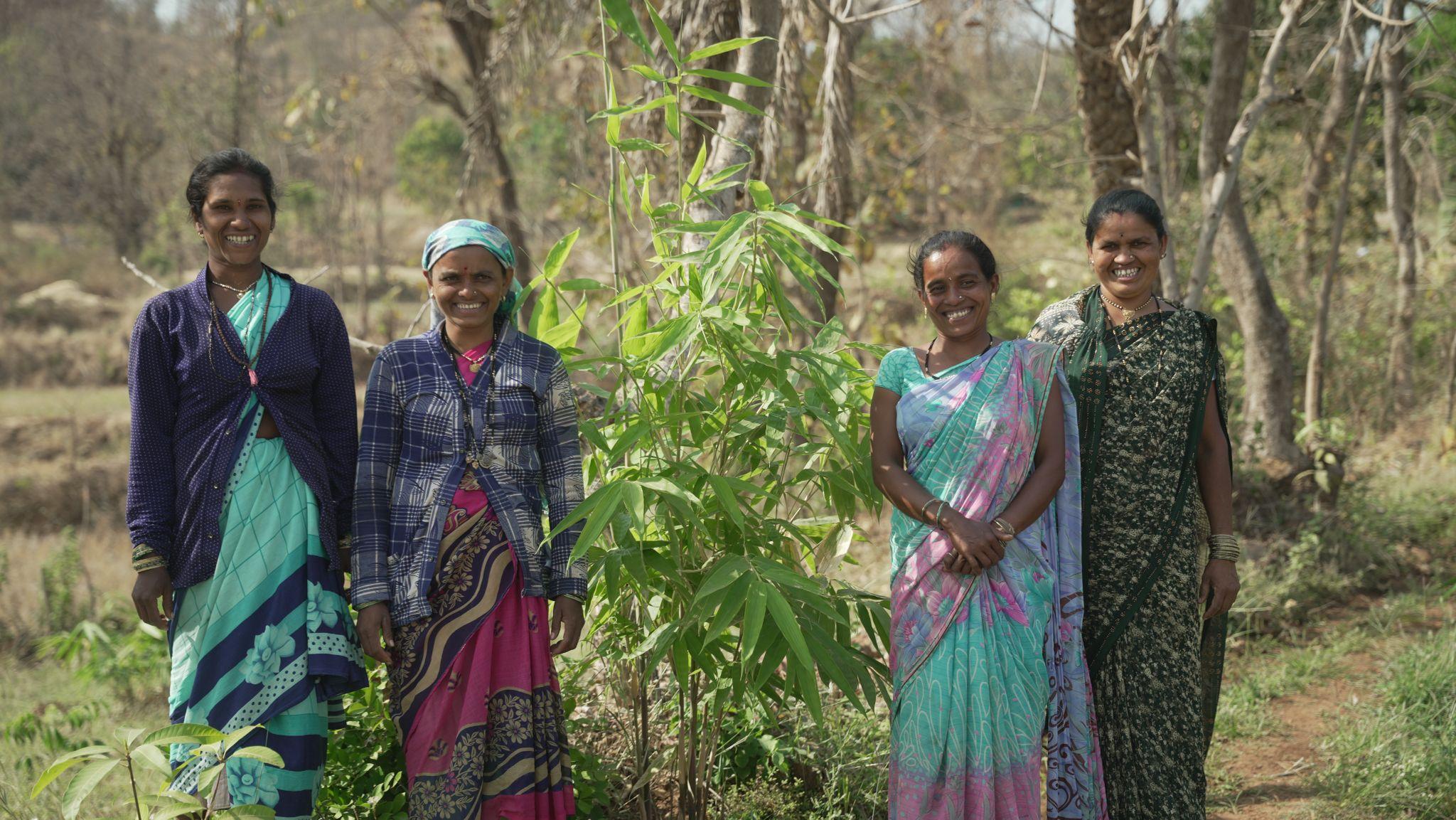
08 June 2026, Bengaluru: In a landmark moment for India's rural economy, Industree Foundation has become the first organisation in the country to secure Forest Stewardship Council (FSC®) Forest Management Certification for privately owned bamboo plantations managed by smallholder farmers. Awarded by SCS Global Services, the certification covers 6,671 small and marginal women farmers across 1,112.9 hectares spanning Shivamogga, Hassan, and Chikmagalur in Karnataka, many cultivating bamboo on fragmented, barren, and distributed plots as small as one-third of an acre.
What makes this achievement truly exceptional is not just its unprecedented nature in India, but the inclusive model behind it. Globally, FSC® certifications are typically awarded to large, consolidated forest estates. Securing this across fragmented smallholder plots required substantial technical innovation and institutional groundwork, with Industree bringing together hundreds of smallholder women farmers under a single certification framework, setting a new benchmark for community-level forest certification.
For many of these women, the road to this milestone has been long and difficult. The FSC Group Certification framework is designed for smallholders who face barriers of cost and complexity, allowing them to collectively share responsibilities under a single group entity, making it the right fit for this community.
For the women brought together by Industree, those barriers ran deeper. Dependent on rain-fed agriculture on land that had turned barren, many earned minimal incomes while family members migrated to cities for work. Caught between climate change, land fragmentation, and economic uncertainty, many had nearly given up on farming. Smallholder farmers are particularly vulnerable to climate change, but they are also a key part of the solution. Bamboo cultivation became the turning point, and it was the group certification model that gave these women the framework to turn hope into a market-ready livelihood.
Commenting on this milestone, Neju George Abraham, CEO, Industree Foundation, said, “For the women farmers and collectives who have worked so hard to get here, this FSC FM certification is a recognition of their commitment and resilience. For the thousands of smallholder farmers across the country, it establishes a real, visible pathway to FSC certification and global markets.
What gives us the most confidence is the energy we are seeing on the ground. Farmers understand how transformative better market access can be, and they are eager to be part of it. This achievement demonstrates what becomes possible when smallholder communities have the right technical and institutional support around them. We hope it encourages other smallholder farmers across India to see certification not as a distant goal, but as an achievable one, and to take that step forward."
For these women farmers, FSC® certification is far more than a compliance label. It brings recognition, credibility, and access to markets that were once entirely out of reach, verifying that their bamboo is sustainably grown, legally compliant, and fully traceable from source to market. These are essential requirements for buyers across high-value sectors such as fashion, furniture, packaging, construction, and décor, particularly in Europe and North America. Certified materials command a premium, positioning these farmers as credible suppliers within ethical, traceable global supply chains and directly supporting the goal of enabling each farmer to earn at least ₹1,00,000 as additional annual income, meeting the Lakhpati Didi threshold under DAY-NRLM within three to four years.
Central to this transformation is Industree's comprehensive support model, which accompanies women farmers at every stage of their bamboo cultivation journey. Through the Regenerative Agroforestry and Livelihoods Project, Industree provides end-to-end technical training covering pre-plantation practices such as land assessment, selection of suitable bamboo species, soil preparation, and sapling planting, as well as post-plantation support including growth monitoring, sustainable harvesting techniques, and adherence to global FSC® certification standards. Women farmers are also guided through the certification application process itself, with dedicated training sessions that help them understand its requirements, benefits, and long-term market implications. This structured support equips them to reimagine agriculture as a viable, business-oriented livelihood, one that emphasises efficiency, profitability, and sustainability.
Beyond market access, bamboo cultivation offers long-term economic security, with plantations yielding from the fourth year and continuing for over 40 years. Industree's network of Primary Processing Units, each serving clusters of approximately 2,000 women farmers and processing between 2,000 to 5,000 tonnes of bamboo annually at projected revenues of ₹5 to ₹8 crore per unit, serves as the critical link between raw cultivation and market-ready products. Located close to farming communities, these units reduce post-harvest losses and cut transportation costs, while also creating employment for landless and marginal women who may not own land but can participate in processing and enterprise activities. Together, the three-tier model of plantation, primary processing, and finished goods enterprise ensures farmers benefit from, and are recognised at, every stage of the value chain.
The long-term vision is ambitious: to empower one million women farmers across 500 clusters through SRLM partnerships, transforming India's bamboo sector from largely informal and import-dependent to globally competitive and export-ready. This certification reinforces national policy priorities around bamboo cultivation and sustainable agroforestry, contributing to a stronger enabling environment for smallholder farmers across the country. It is proof that even the smallest plots of land can be part of high-value international supply chains, and that growth, when rooted in inclusion, is measured not only in output, but in opportunity.